
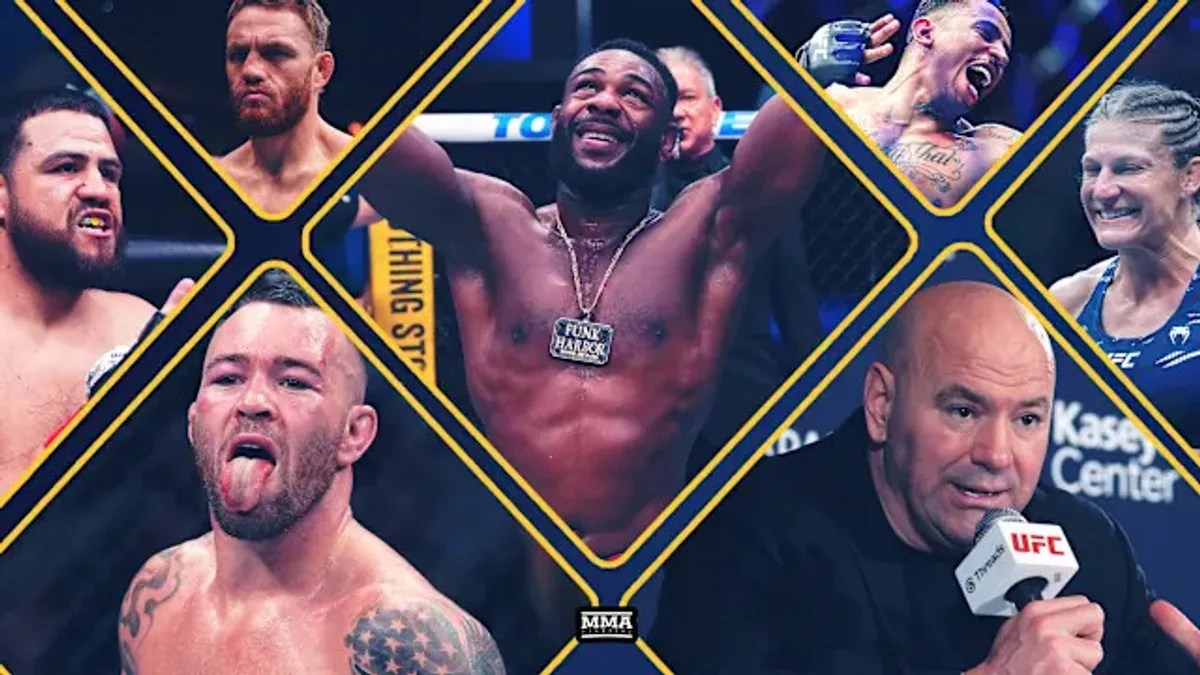
The Anatomy of a Public Feud
When Aljamain Sterling captured the UFC bantamweight title via disqualification at UFC 259 in March 2021, he became the first fighter in the organization’s history to win a belt through an illegal strike. This technicality provided the perfect vacuum for Dana White to exert his influence over the narrative. White’s public skepticism regarding Sterling’s decision to continue the fight—despite Petr Yan’s blatant, fight-ending illegal knee—set a precedent for how the promotion manages its champions.
White’s rhetoric often serves as a barometer for a fighter’s perceived marketability rather than their objective performance. By casting doubt on Sterling’s legitimacy, the UFC effectively suppressed his leverage during contract negotiations. This is a classic tactic in the promotion’s playbook: if the boss questions the champion, the audience follows suit, diminishing the fighter’s bargaining power for future pay-per-view points.
The fallout from that night transformed Sterling from a top-tier contender into a polarizing figure. While he defended his title three times—including a dominant performance against T.J. Dillashaw—the shadow of White’s initial comments lingered. This dynamic highlights a broader trend where the UFC’s promotional engine prioritizes the "story" over the "sport," often at the expense of the athlete’s public perception.
SPONSORED

This manipulation of public sentiment is not accidental; it is a calculated business strategy. For those looking to understand the financial implications of these narratives, The 2026 Betting Mirage: Why Your Combat Sports Edge is Dead provides a sobering look at how public perception, often manufactured by the promotion, distorts betting lines and market realities.
The Economics of Fighter Leverage
The UFC operates under a model where the promotion is the primary brand, and the fighters are essentially independent contractors with limited bargaining power. When Dana White publicly criticizes a champion, it directly impacts the fighter's ability to secure lucrative sponsorship deals or negotiate higher base pay. Sterling’s experience serves as a case study in the risks of defying the promotional narrative.
Data from the 2023 fiscal reports indicates that fighter compensation remains a fraction of total revenue compared to major leagues like the NFL or NBA. While the UFC’s parent company, TKO Group Holdings, continues to see record-breaking valuations, individual fighters like Sterling must navigate a landscape where their "star power" is determined by their willingness to play along with the UFC’s marketing machine. If a fighter is deemed "difficult," their path to high-profile matchups becomes significantly more arduous.
This structural imbalance is exacerbated by the lack of a formal union. Without collective bargaining, fighters are left to negotiate individually against a monolithic entity that controls the broadcast schedule, the matchmaking, and the public relations narrative. As discussed in UFC 2026: The ESPN Broadcast Strategy and Schedule Evolution, the integration with major media partners further cements the UFC’s ability to dictate which fighters receive the "star" treatment and which are left to languish in the mid-card.
Narrative Control as a Promotional Tool
Dana White’s ability to influence the fan base is unparalleled in combat sports. By using press conferences as a platform to voice his "honest" opinions, he creates an environment where fans feel they are getting an insider’s view of the sport. However, this transparency is highly curated. When White labels a fighter as "unwilling to fight" or "not a draw," it creates a self-fulfilling prophecy that impacts ticket sales and PPV buys.
Consider the case of the bantamweight division’s transition. Following Sterling’s loss to Sean O’Malley at UFC 292 in August 2023, the narrative shifted instantly. O’Malley, a fighter who aligns perfectly with the UFC’s desire for a flashy, media-savvy champion, was elevated to the status of a global superstar almost overnight. The contrast in how White spoke about O’Malley versus Sterling was stark, underscoring the promotion’s preference for certain archetypes.
This isn't merely about personality; it is about the bottom line. The UFC’s valuation is tied to its ability to create stars who can move the needle in the digital age. Fighters who don't fit the mold—or who challenge the promotion’s authority—are often sidelined or forced into unfavorable matchups. This creates a culture of compliance that is essential for the UFC’s current business model to remain profitable for its shareholders.
The Future of Fighter Autonomy
As the sport moves toward 2026 and beyond, the tension between fighter autonomy and promotional control will likely intensify. Fighters are becoming more aware of their value, utilizing social media and independent content creation to build their own brands outside of the UFC’s ecosystem. Sterling himself has been active on YouTube, attempting to reclaim the narrative that the UFC’s press machine attempted to strip away.
However, the barrier to entry remains high. The UFC’s control over the top-ranked talent ensures that even those who build their own followings must eventually return to the promotion’s table to compete at the highest level. This creates a cycle where the fighter is constantly fighting on two fronts: the opponent in the cage and the bureaucracy in the front office.
Ultimately, the saga of Aljamain Sterling and Dana White is a microcosm of the modern UFC. It is a business that demands total alignment with its corporate goals. While the sport itself remains a test of human potential, the environment in which these tests occur is increasingly defined by the cold, hard logic of corporate entertainment. For the fans, the challenge is to separate the manufactured drama from the genuine athletic achievement occurring inside the octagon.
Comparative Analysis: The UFC vs. Other Combat Models
When comparing the UFC’s management style to the PFL or Bellator, the differences in fighter treatment are evident. The PFL, for instance, utilizes a tournament-based structure that removes some of the subjectivity from matchmaking. By relying on a points-based system, the PFL limits the ability of promoters to "punish" fighters for not being media-friendly, as the path to the championship is clearly defined by wins and losses.
In contrast, the UFC’s reliance on the "Dana White approval rating" creates a system where meritocracy is often secondary to marketability. While this has undoubtedly led to the UFC becoming the most successful combat sports organization in history, it has also created a climate of instability for the athletes. The uncertainty of one’s standing with the promotion can lead to shorter careers and increased mental strain, as fighters feel they must perform not just for the judges, but for the boss’s microphone.
Looking ahead, the evolution of the sport will likely depend on whether fighters can successfully leverage their individual brands to force a change in the status quo. If athletes can prove that their personal following is independent of the UFC’s promotional machine, the balance of power may shift. Until then, the "Sterling effect"—where a fighter’s legacy is constantly debated and undermined by the promotion—will remain a standard feature of the UFC landscape.
FAQ
Why does Dana White criticize his own fighters publicly?
Public criticism is a strategic tool used by the UFC to manage fighter leverage and influence fan perception. By questioning a fighter's legitimacy or desire, the promotion can suppress bargaining power during contract negotiations.
How does the UFC's business model affect fighter pay?
The UFC operates as a closed ecosystem where the organization controls the brand, the matchmaking, and the media narrative. This structure results in fighter compensation being a significantly lower percentage of total revenue compared to major professional sports leagues.
Is Aljamain Sterling's experience unique in the UFC?
Sterling's experience is part of a broader pattern where the UFC uses its media platform to shape the narrative around champions who do not fit the promotion's preferred 'star' archetype. This tactic has been observed with various fighters who challenge the status quo.
How do independent brands impact the UFC's control?
Fighters who build their own followings on platforms like YouTube or social media create a secondary brand that exists outside the UFC's direct control. While this provides some leverage, the UFC's monopoly on high-level competition forces most athletes to eventually conform to the promotion's requirements.
